
Real estate deals can look straightforward on paper.
A developer finds land. A contractor is appointed. Investors come on board. A joint venture agreement is signed, and construction begins.
Then the money starts flowing, expectations change, and suddenly everyone is reading the same contract differently.
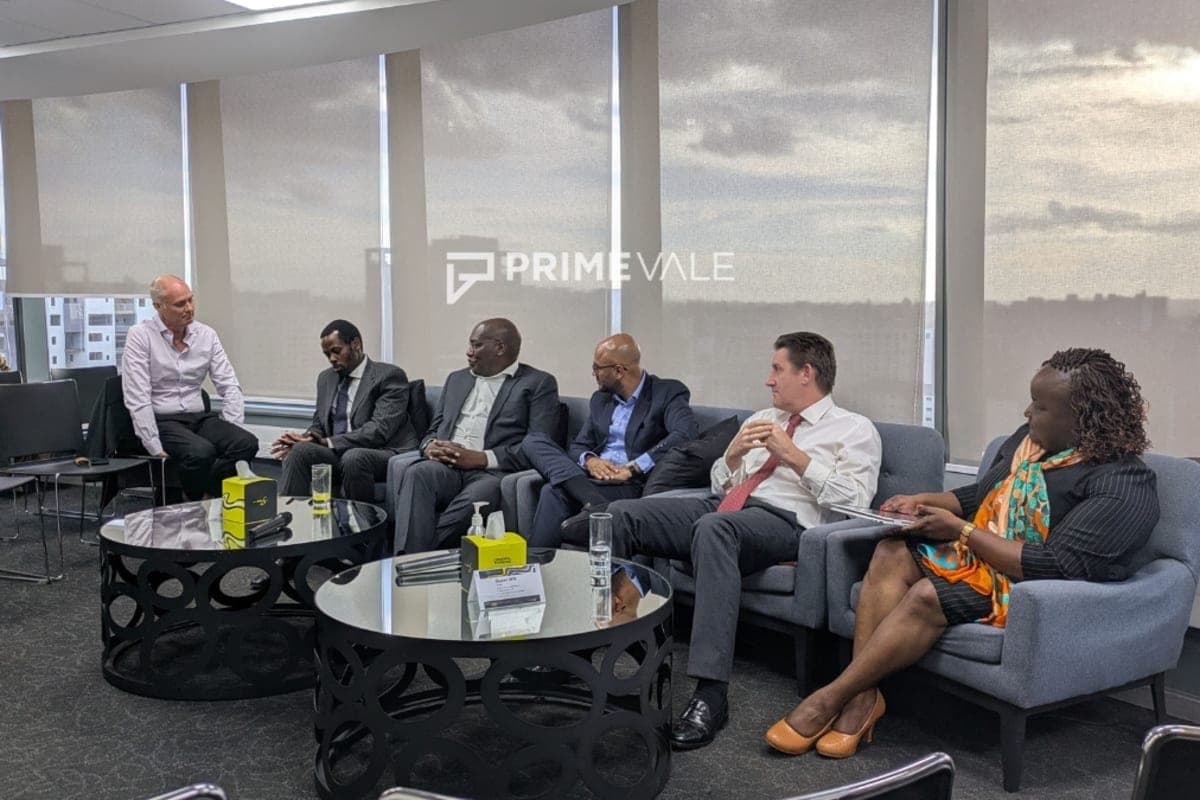
This was one of the themes discussed in a recent real estate roundtable held at the ENS offices, where lawyers, developers and property professionals discussed some of the biggest risks facing real estate transactions in Kenya.
The consensus was one: a good contract should not simply provide a way to fight when things go wrong. It should help prevent the fight from happening in the first place.
A contract has to work for both sides
Walter Amoko, a partner at ENS Kenya, argued that the starting point for any contract should be fairness.
In a construction project, for example, the employer wants the project delivered to the required standard, within the agreed timeline and budget.
The contractor, on the other hand, wants to be paid for delivering what was agreed.
The contract therefore needs to create a structure where both parties understand their obligations and how the relationship will be administered.
This sounds obvious, but problems often arise when contracts are drafted by simply borrowing clauses from previous agreements.
Walter warned that a contract cannot be properly drafted unless you understand the commercial arrangement behind it.
Copying provisions from another transaction without understanding why they were included can create risks rather than protect the parties.
The four areas where real estate deals can go wrong
From a developer's perspective, the problem is not always the absence of a contract. Often, it is ambiguity within the contract.
Shiv Arora, the Executive Director of Linden Africa and former CEO of Superior Homes, explained that his team spends significant time on four areas in joint ventures and other real estate transactions.
The first is roles and responsibilities.
Who is responsible for what? What is the developer expected to do? What must the landowner provide? At what point do those obligations kick in?
The second is decision-making authority.
Who can make decisions on behalf of the project? Which decisions require board approval? Which matters require shareholder approval? What decisions can the developer make without going back to the other party?
The third is payment and waterfall mechanisms.
If KSH 100 million comes into a project account, everyone should already know what happens to that money.
Who gets paid first? What expenses are deducted? What triggers a payment? How is the remaining money distributed?
The fourth is simply clarity.
Shiv said parties sometimes spend an extraordinary amount of time negotiating individual provisions, including warranties, only to discover later why the wording mattered.
He insisted on spending as much time as you possibly can reviewing the contract, as saving a few days during negotiations can be extremely expensive if an ambiguity later becomes a dispute.
When the money starts flowing, relationships change
One of the more interesting observations from the discussion was that disputes often emerge when a project stops performing as expected.
When sales are strong, and money is coming into a joint venture, relationships tend to be easier.
But what happens when sales slow down?
Perhaps the market has changed. Perhaps collections have fallen. Perhaps construction is behind schedule. Perhaps one party believes the other is not doing enough marketing.
Suddenly, the parties start pointing fingers.
The problem can become even more complicated when a family-owned parcel of land is involved.
Shiv shared an example where the death of a landowner changed the dynamics of a transaction. The original agreement had been negotiated with one person, but the next generation had very different expectations.
The point was not that such situations can always be prevented. They cannot.
But developers can conduct due diligence beyond simply checking a title.
Who are you actually entering into business with? What happens if the principal dies? What is the succession plan? Are the beneficiaries likely to support the project?
Those questions can be just as important as checking the land documents.
Mediation should happen before relationships completely break down
The panel also challenged the traditional approach of waiting for a dispute to become a full-blown court battle.
Walter pointed to dispute avoidance mechanisms used in international construction contracts, where independent experts can be involved during the life of a project.
Their role is not necessarily to wait for a dispute and then decide who is right.
Instead, they can identify warning signs early and help the parties address problems before they become major disputes.
The idea is particularly relevant to large developments, where stopping a project while parties fight over a contractual interpretation can have enormous consequences.
As one speaker put it, sometimes the objective is not to determine who is right or wrong, but to find a way of getting the parties back to the project.
A real-life mediation reduced nine court cases to one settlement
Perhaps the strongest illustration came from Shiv who shared his experience in a shareholder dispute involving Superior Homes.
He described a situation where nine different suits had been filed within roughly three weeks, with both sides using different provisions of their agreements to build further claims.
The matter eventually went to mediation.
The mediator, Asif Kareem, took an unusually direct approach.
Instead of allowing the lawyers to dominate the process, the parties were asked to step away from their legal teams and identify the actual issues.
They were even asked to write down the nine cases that had been filed.
According to the developer, the parties could not even clearly list all nine disputes.
After hours of heated exchanges, the underlying disagreement turned out to be much simpler: one side believed the price being offered was unfair.
The parties reached a settlement within two days, bringing the various disputes to an end.
It was a powerful reminder that the legal complexity surrounding a dispute does not always reflect the underlying commercial problem.
Lawyers need to solve problems, not just fight them
Walter criticized the legal profession.
He noted that lawyers can sometimes make disputes more complicated by throwing every possible legal argument into the fight.
The most effective lawyers, he argued, are not necessarily those who can produce the longest list of arguments.
They understand the commercial problem and help their clients find a workable solution.
For real estate projects, this distinction matters.
A development cannot always wait years for a dispute to be resolved.
There may be buyers waiting for houses, contractors waiting to be paid, financing arrangements, approvals, infrastructure, and investors whose money is tied up in the project.
The best dispute resolution mechanism may be the one you never use
The central message from the roundtable was therefore less about litigation and more about prevention.
Contracts need to be commercially informed. Responsibilities need to be clear. Decision-making powers need to be defined.
And where something begins to go wrong, there should be a mechanism for addressing it early.
Because once concrete has been poured, money has been spent, and buyers have committed themselves, unwinding a real estate transaction is rarely as simple as cancelling a contract.
The real value of a good contract may therefore not be what happens when the relationship breaks down.
It is what the contract does to stop the relationship from breaking down in the first place.
Anthony Havelock, the other panelist, covered the market trends, which we discuss in a different article.