
Moving to Nairobi can be exciting, but finding the right place to live is one of the first things you will need to figure out.
Nairobi is a big city, and where you live can have a surprisingly big impact on your day-to-day life.
Your commute, access to restaurants and shops, security, schools, nightlife, and even how easy it is to meet people can all depend on the neighbourhood you choose.
For expats, you want to live close to other expats to have some familiarity, as well as close to convenience.
Some have a high concentration of international organisations and diplomatic missions, while others are popular because of their restaurants, nightlife, shopping and modern apartments.
The important thing is not simply finding the "best" neighbourhood. It is finding the one that fits the way you intend to live in Nairobi.
Nairobi's best residential areas for expats at a glance
Area | Best for | Typical house type | Rough monthly rent* | Expat presence |
|---|---|---|---|---|
Westlands | Professionals, couples, business travellers | Apartments, furnished apartments, townhouses | KSh 60,000 to 250,000+ | High |
Kilimani | Young professionals, couples | Mostly apartments | KSh 45,000 to 180,000+ | High |
Lavington | Families, executives | Apartments, townhouses, standalone houses | KSh 60,000 to 250,000+ | High |
Kileleshwa | Professionals, couples, families | Mostly apartments, some townhouses | KSh 50,000 to 180,000+ | Moderate to high |
Riverside | Executives, corporate expats | High-end apartments, serviced apartments | KSh 100,000 to 300,000+ | High |
Parklands | Families, professionals | Apartments and standalone houses | KSh 50,000 to 180,000+ | Moderate |
Gigiri | Diplomats, UN staff, international organisations | Villas, standalone houses | KSh 150,000 to 500,000+ | Very high |
Runda | Families, diplomats, senior executives | Large standalone houses, villas | KSh 150,000 to 500,000+ | Very high |
Karen | Families, people wanting space | Standalone houses, villas, cottages | KSh 150,000 to 400,000+ | High |
These are broad market ranges rather than fixed prices. Furnished homes, larger properties, newer developments and properties in particularly desirable compounds can cost considerably more. Current market comparisons also show significant differences between neighbourhoods depending on property type and quality.
Apartment or standalone house?
This is one of the first decisions you should make.
If you are coming to Nairobi alone or as a couple, an apartment will usually be the easiest option.

There are plenty of modern developments in areas such as Westlands, Kilimani, Kileleshwa and Riverside. Many come with amenities such as gyms, swimming pools, parking, lifts, backup power and security.
For families, particularly those with children, a standalone house or townhouse can make more sense.
Areas such as Karen, Runda, and parts of Lavington offer larger compounds, gardens and more space.
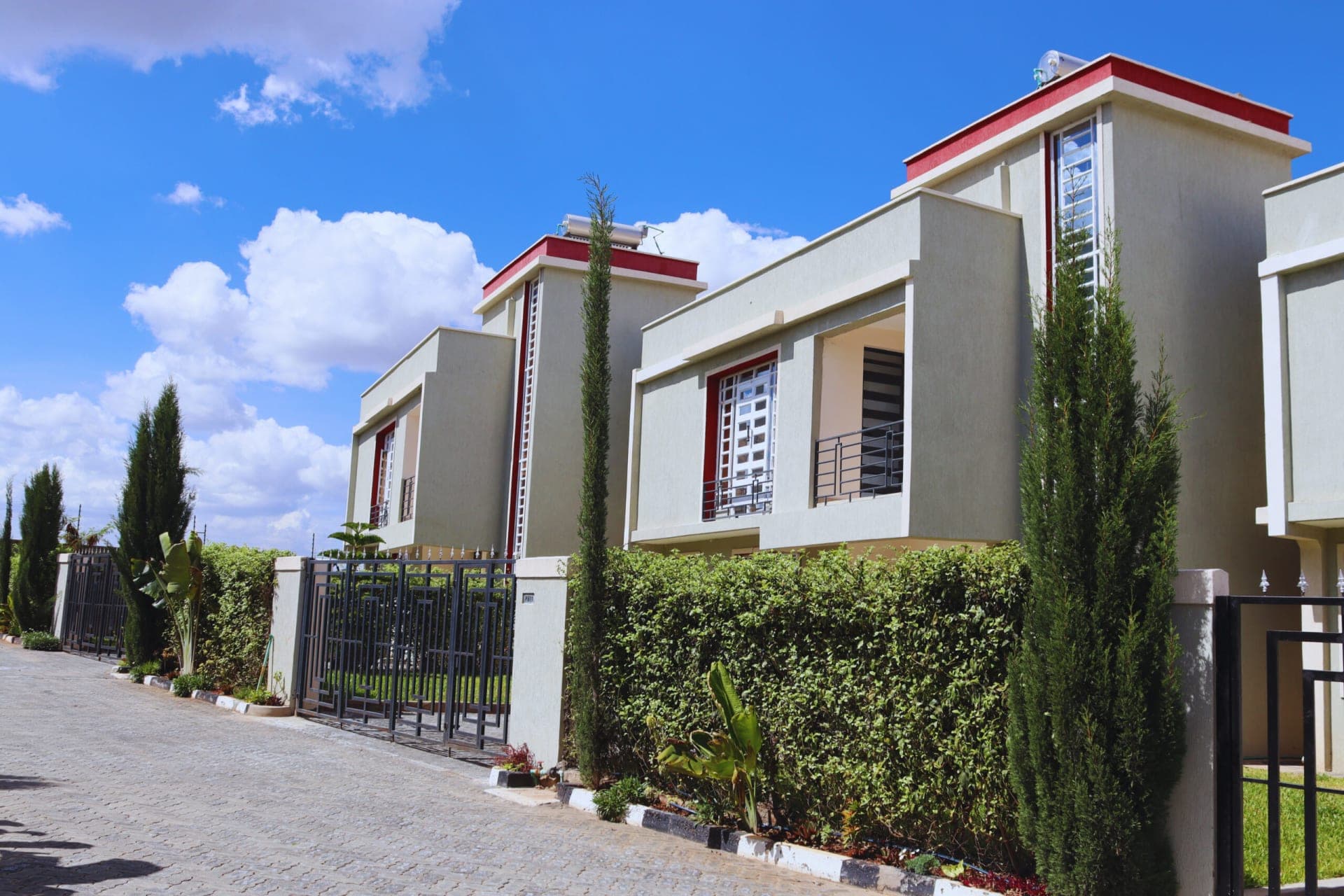
There is also a middle ground. Some gated developments offer townhouses or villas with the security and shared amenities of an apartment development but with considerably more space.
Your choice will ultimately come down to your budget, family size, lifestyle and how much space you actually need.
1. Westlands
If you want to be close to the action, Westlands is probably one of the easiest places to start your search.
It's one of Nairobi's main commercial and lifestyle centres. There are offices, restaurants, shopping malls, hotels, gyms and entertainment venues all within a relatively small area.
Also, most international offices are in Westlands or around the area, so it becomes quite convenient for you to live close to your job and avoid unnecessary Nairobi traffic.
Housing is dominated by modern apartments, although there are a few townhouses and larger homes in some of the quieter sections. More developers are opting to build high-rises for a better ROI as land in Westlands is very expensive.
For someone new to Nairobi, Westlands can be an easy place to settle because you have so many things close by.
One thing to note. Some roads around Westlands can become extremely busy during peak hours, meaning heavy traffic.
Best for: Young professionals, couples, corporate expats and people who want restaurants, shopping and entertainment close by.
2. Kilimani
Kilimani is arguably the most popular residential area, particularly among younger professionals and expats.
The neighbourhood has a huge selection of apartments, ranging from relatively affordable one-bedroom units to large luxury apartments. There are also plenty of cafés, restaurants, gyms and shopping facilities nearby.
Kilimani is particularly convenient if you work around the CBD, Upper Hill, Ngong Road or the southern part of Westlands.
There is also a sizeable international community living in and around Kilimani. It is a neighbourhood where you are likely to find both long-term residents and people who have recently moved to Nairobi.
The trade-off is density. The area has experienced a huge amount of apartment development, and some parts can feel considerably busier than they did a few years ago. That has also caused issues with resources such as water; however, most developers either have a borehole or provide water for the residents.
Best for: Young professionals, couples, digital nomads and expats looking for modern apartments and an active social life.
3. Lavington
If you prefer somewhere quieter and greener, but near Kilimani & Westlands, then Lavington is the place.
You will find a mix of apartments and townhouses and standalone homes, with leafy streets and quieter residential pockets.
It is also close to shopping and restaurants, including Lavington Mall, while Kilimani and Westlands are not far away.
Lavington also has a strong executive and family rental market, making it popular with professionals who want more space without moving all the way out to Karen or Runda.
There are also diplomatic and international residents in the wider Lavington area, although the concentration is not as high as in Gigiri or Runda.
Best for: Families, couples and executives looking for a quieter neighbourhood that is still relatively central.
4. Kileleshwa
Kileleshwa sits between some of the city's more established residential areas and the newer apartment developments that have transformed parts of the city.
It has become popular with professionals and families because of its location and range of apartments. Compared with Kilimani, it generally feels more residential and less focused on nightlife.
You can get to Kilimani, Lavington, Riverside and Westlands relatively easily, although, because of Nairobi traffic, "close" does not always mean "quick".
There is a growing international population in the area, particularly among professionals who want modern apartments without necessarily paying the premium associated with some parts of Westlands or Riverside.
Best for: Professionals, couples and families looking for modern apartments in a quieter neighbourhood.
5. Riverside
Riverside is a particularly interesting option for expats who want something more exclusive and quiet while remaining close to Westlands.
The area has modern high-end apartments, as well as serviced apartments.
It is close to Westlands and several major office developments, making it popular with senior professionals and corporate tenants.
It also has a more international feel than many other residential areas because of its proximity to major businesses, international organisations and diplomatic activity.
Riverside is generally more expensive than areas such as Kileleshwa and Kilimani, but for someone who values convenience, privacy and modern housing, the premium can make sense.
Best for: Senior executives, corporate expats, couples and people looking for high-end apartments.
6. Parklands
Parklands is one of the more established residential areas near Westlands.
It has a mixture of apartments and standalone homes and is particularly convenient for people who want access to Westlands while remaining close to the CBD.
There are plenty of shops, restaurants, hospitals and other services in the area. Its proximity to major healthcare facilities such as M.p. Saha, and Aga Khan Hospitals is also useful for families.
Parklands has a diverse population, including professionals and international residents, although the expat concentration is generally lower than in Gigiri, Runda or Westlands.
It can be a bit overcrowded in certain parts, so it's important to have that in mind.
Best for: Families, professionals and people who want convenient access to Westlands and the CBD.
7. Gigiri
If you are moving to Nairobi to work for an international organisation, Gigiri is one of the first neighbourhoods you should consider.
This area is best known for being the headquarters of the United Nations Environment Programme (UNEP), other UN bodies, and a large number of diplomatic missions and international organisations.
The US Embassy, among other embassies, is also located in the Gigiri area.
It is also home to many ambassadors and high-level diplomats.
This concentration of international institutions has naturally created a large expatriate and diplomatic community.
Housing tends to be expensive. You will find villas and standalone houses, with many properties designed around the needs of diplomats and international professionals.
There is, however, a new development currently under construction: a luxurious high-end apartment complex known as Silva, one of, if not the only, apartment complexes in this area.
If you work in Gigiri, living nearby can save you from one of Nairobi's biggest daily frustrations: commuting.
Many professionals who work at the UN and US Embassy actually walk home.
Best for: Diplomats, UN staff, NGO employees, international organisation workers and families.
8. Runda
Runda is another popular choice for expats, particularly families and senior professionals.
It is a leafy, low-density neighbourhood with large homes, gated compounds and plenty of privacy.
It is close to Gigiri, which makes it particularly attractive to diplomats and people working for international organisations.
Unlike Kilimani or Westlands, you will not find rows of high-rise apartments in this area.
Runda is much more about large houses, gardens, privacy and space.
The area is also close to shopping malls such as Two Rivers Mall, The Village Market, Roslyn Riviera, and restaurants both fancy and casual.
If you have children and want a large family home, Runda is one of the strongest options in Nairobi.
Best for: Families, diplomats, UN and NGO workers, senior executives and people looking for privacy and space.
9. Karen
Karen is usually considered one of the 'old money' neighbourhoods. A great number of old wealthy business people as well as politicians live in this area.
It is spacious, green, and much less urban than areas such as Westlands or Kilimani.
In Karen, you will mostly find large homes, villas, cottages, and gated compounds, often sitting on significantly larger plots. Some sit on acres of land.
The area is particularly popular with families because of the space, schools, restaurants, and recreational facilities.
Karen is also home to an established international community, including long-term expatriate residents.
However, it is not the sort of place you choose if your priority is being close to nightlife or having dozens of restaurants within walking distance.
The commute is the main consideration. If you work in Westlands or Gigiri, living in Karen could mean spending considerably more time on the road.
Best for: Families, people wanting space and greenery, long-term residents, and those who prefer a quieter lifestyle.
Renting or buying in Nairobi?
Whether you should rent or buy depends largely on how long you expect to be in Kenya.
If you are here for six months, a year, or even a couple of years, renting will usually give you more flexibility. This is particularly true if you are still getting to know Nairobi and are not yet sure which neighbourhood suits you.
Related: Nairobi Remains One of Africa's More Affordable Rental Cities, New Numbeo Index Shows
Buying becomes more interesting if you expect to stay for many years and have found an area and property that you genuinely like.
There are other factors to consider too, including the amount of money you have available for the purchase, transaction costs, mortgage rates, expected property appreciation, maintenance costs, and what you could earn by investing that money elsewhere.
If you are trying to decide between renting and buying, it is worth running the numbers rather than making the decision based purely on monthly rent.
You can use the PrimeVale Rent vs Buy Calculator to compare the two options based on your own circumstances.
Where do expats tend to socialise?
Where you live is only part of the equation. Nairobi also has a fairly active social scene for international residents.
Westlands is one of the biggest entertainment hubs, with restaurants, bars, hotels and nightlife around the area. Kilimani and Kileleshwa also have plenty of restaurants, cafés and bars that attract both locals and foreigners.
Gigiri and Riverside tend to offer a quieter, more upmarket social scene, while Karen has a number of restaurants, cafés and weekend spots popular with families and long-term residents.
There are also plenty of places outside these neighbourhoods that expats regularly visit, from restaurants and rooftop bars to cultural spaces and weekend destinations.
We will cover the best restaurants, bars, nightlife and entertainment spots for expats in Nairobi in a separate guide.
So, where should you live?
There is no single answer.
If you want an active urban lifestyle, Westlands and Kilimani are good places to start.
If you want a quieter but still central neighbourhood, look at Lavington and Kileleshwa.
If you want modern, high-end apartments close to major businesses, Riverside is worth considering.
If you work for the UN or a diplomatic mission, Gigiri and Runda could make your life considerably easier.
And if you are moving with a family and want a large home, privacy and greenery, Karen and Runda are difficult to ignore.
The biggest mistake would be choosing your home based only on how nice the property looks.
Think about where you work, how long you will be in Nairobi, whether you want an apartment or a house, how often you go out, whether you have children, and how much time you are willing to spend commuting.
Nairobi has plenty of great places to live. The trick is finding the neighbourhood that works for your particular life.