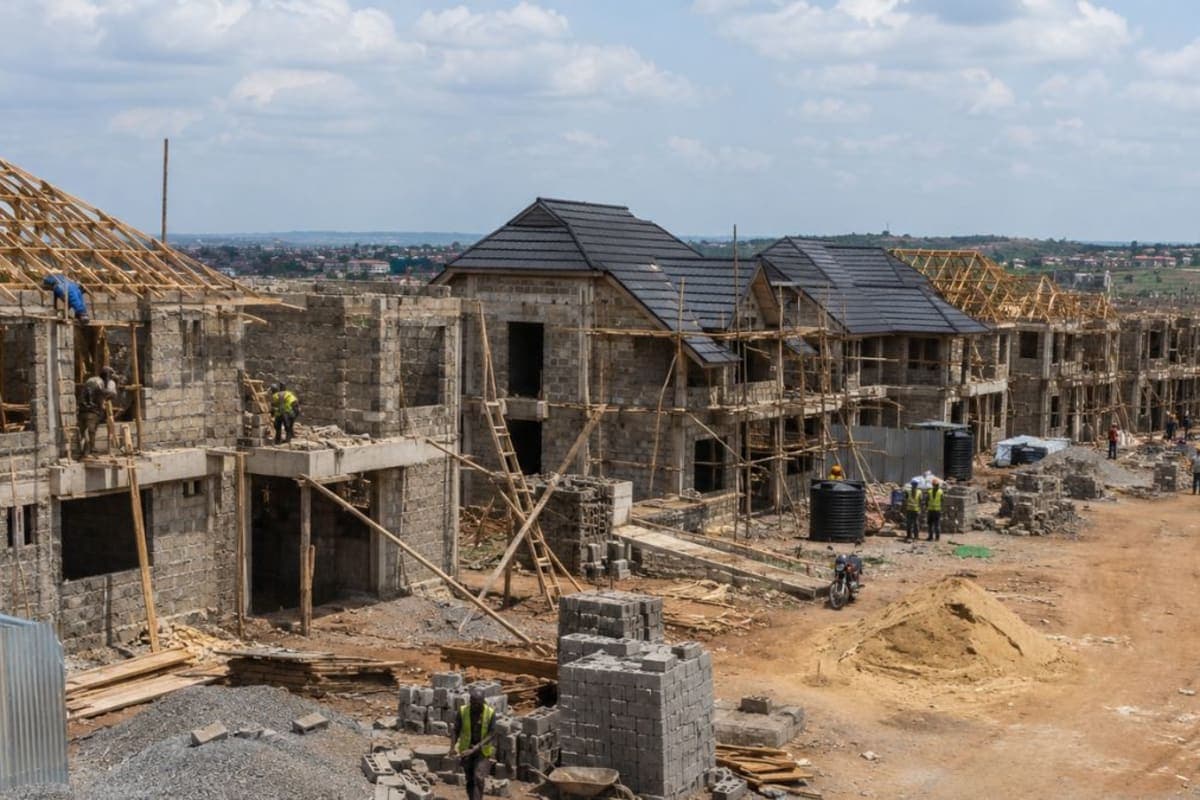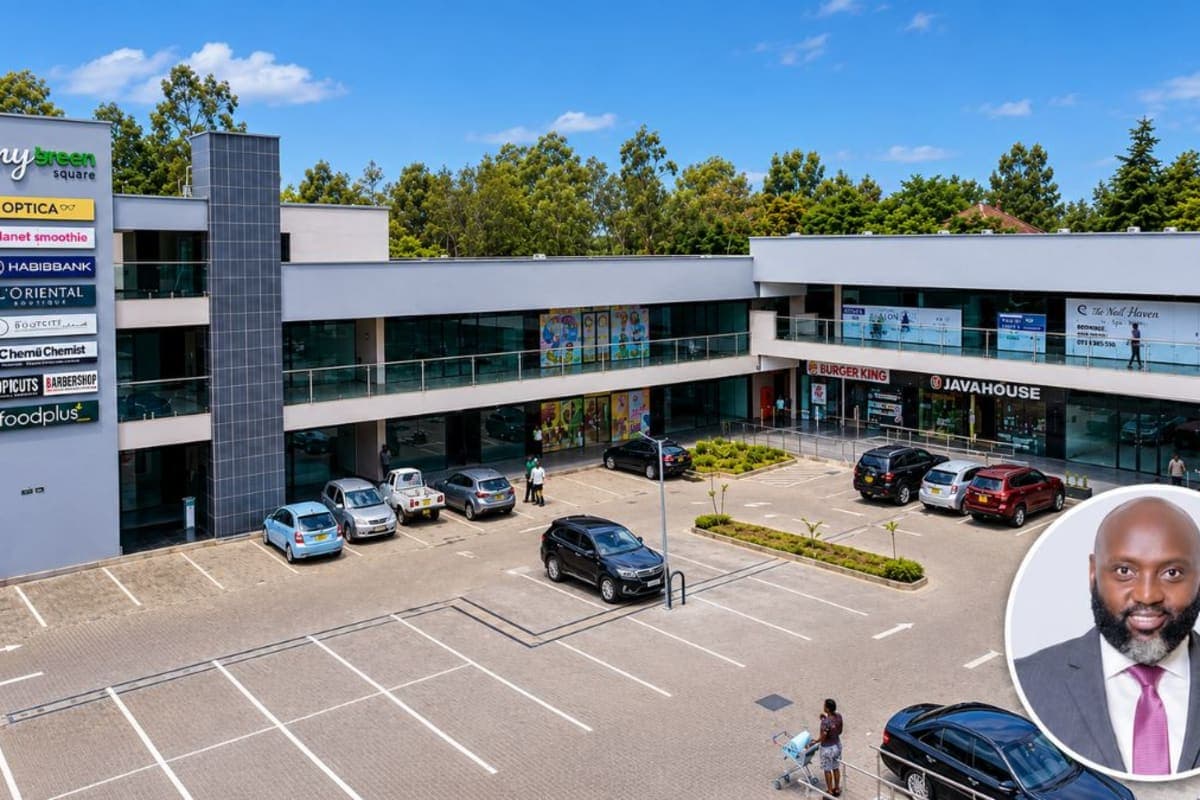

If you ask Mwenda Thuranira about his career, he won’t describe real estate as a job.
To him, it’s an obsession, a passion for turning empty plots of dirt into bustling, high-density hubs. He says this in an interview with the Financially Incorrect Podcast.
As the founder and CEO of MySpace Properties, Mwenda became one of the most recognizable faces in East Africa’s property sector.
His story is a classic case of hustle, big vision, and the harsh realities of scaling a business in Kenya.
The Early Sparks & The American Dream
Mwenda’s fascination with construction started early.
Growing up between Isiolo and Meru, he would often tag along with his grandfather, a local businessman who had built properties with only a Class 2 education.
By age 14, Mwenda was already demonstrating an entrepreneurial streak, supplying chicken to local eateries.
Though he initially studied travel operations at Utalii College and landed a stint at Air France, his heart was elsewhere.
When the airline closed its local offices, Mwenda saw a doorway to his ultimate goal of going to the United States.
After arriving in America, he started from the ground up, literally.
He worked on US construction sites (mjengo), earning around $500 a week while learning the physical side of building.
Recognizing that real estate is driven by finance, he trained as a loan officer and got licensed as a realtor.
He then began buying older homes, renovating them, and selling them for a profit, using the US credit system to scale.
Returning Home & Revolutionizing Mombasa
When the 2007–2008 global financial crisis hit the US housing market, Mwenda came back home.
He landed in Mombasa with a fresh perspective and noticed a glaring problem: nobody was actively marketing coastal real estate.
Mwenda launched MySpace Properties to fill that gap.
Even before setting up a physical office, he says he put up a massive billboard with his phone number on it.
He went on to found the MOMBASA Homes Expo, which organized 16 expos in its time, putting the coastal region on the map for holiday homes, serviced apartments, and commercial investments.
The Birth of The "MyTown" Concept
After years in residential real estate, Mwenda set his sights on retail.
He noticed a gap between massive regional shopping centers and local roadside kiosks.
He puts it this way: he wanted to modernize kiosks.
His solution?
MyTown Malls: convenient, neighborhood strip malls designed for quick in-and-out visits. His main goal was to offer convenience.
The idea was to anchor a site with a petrol station, a supermarket, a pharmacy, and a café.
And then offer zero parking fees to drive high foot traffic and give tenants single-category exclusivity (e.g., only one pharmacy) so they don't undercut each other.
After spending five years pitching the concept to skeptical banks, Mwenda secured a partnership with AMS Properties to launch the pilot MyTown Mall in Karen, on a project pipeline he once envisioned at scale.
The Turbulence: Insolvency Petitions & Debt Challenges
Building megaprojects in Kenya is a double-edged sword, and Mwenda’s ambitious trajectory eventually hit some severe speed bumps.
While the "MyTown" concept captured headlines, behind the scenes, MySpace Properties was locked in long-standing financial disputes.
The Insolvency Battle: A local contractor, Teams Construction, filed a liquidation petition against MySpace Properties over unpaid debts of about KSH 48 million, which ended up totalling to about KSH 110 million (with interests and legal costs) linked to the construction of One Twiga Apartments in Mombasa.
This led the High court allowing the petition and order that the company be wound up under the Insolvency Act. The insolvency practitioner is Waithaka Ngaruiya.
For Mwenda, the experience underscores a lesson he frequently emphasizes: capital is elusive, and in real estate, market downturns and debt obligations can quickly catch up if timing and cash flow don't align perfectly.
Mwenda Thuranira’s story is a compelling blueprint of Kenyan entrepreneurship, from working construction in the US to pioneering neighborhood strip malls in Nairobi, while navigating the high-stakes legal and financial hurdles that come with big real estate bets.