

For years, apartments have been one of the biggest stories in Kenya’s property market.
Developers have put up thousands of units across Nairobi and its satellite towns, while investors have been drawn by the promise of rental income and capital appreciation.
But that market may be entering a different phase.
At a recent real estate roundtable hosted at the ENS offices, industry players pointed to a noticeable change in where some of the market’s interest is moving.
The view from the discussion was clear: the heat may be coming out of parts of the residential market, while commercial, industrial and income-producing properties are beginning to attract more attention.
This is happening against a broader backdrop of improving activity across Kenya’s property sector.
ENS's latest review of the 2025/2026 market noted stronger office occupancy, rising commercial yields and growing activity in industrial and logistics real estate.
The apartment market may be getting crowded
One of the more direct observations from the roundtable was that residential development, particularly apartments in certain areas, may be reaching a point where supply is becoming a concern.
“There’s a lot of apartments,” Anthony Havelock observed, suggesting that the market may be approaching a point where simply adding more residential units is no longer enough.
This does not mean apartments are suddenly a bad investment.
Kenya still has a significant housing deficit and residential property remains an important part of the market.
The bigger question is whether developers are building the right type of housing, in the right location, for the right buyer or tenant.
For investors, that could mean becoming more selective.
And for developers, it could mean looking beyond the familiar apartment model.
Is commercial property making a comeback?
The conversation at the ENS roundtable suggested that commercial real estate could be one of the areas to watch.
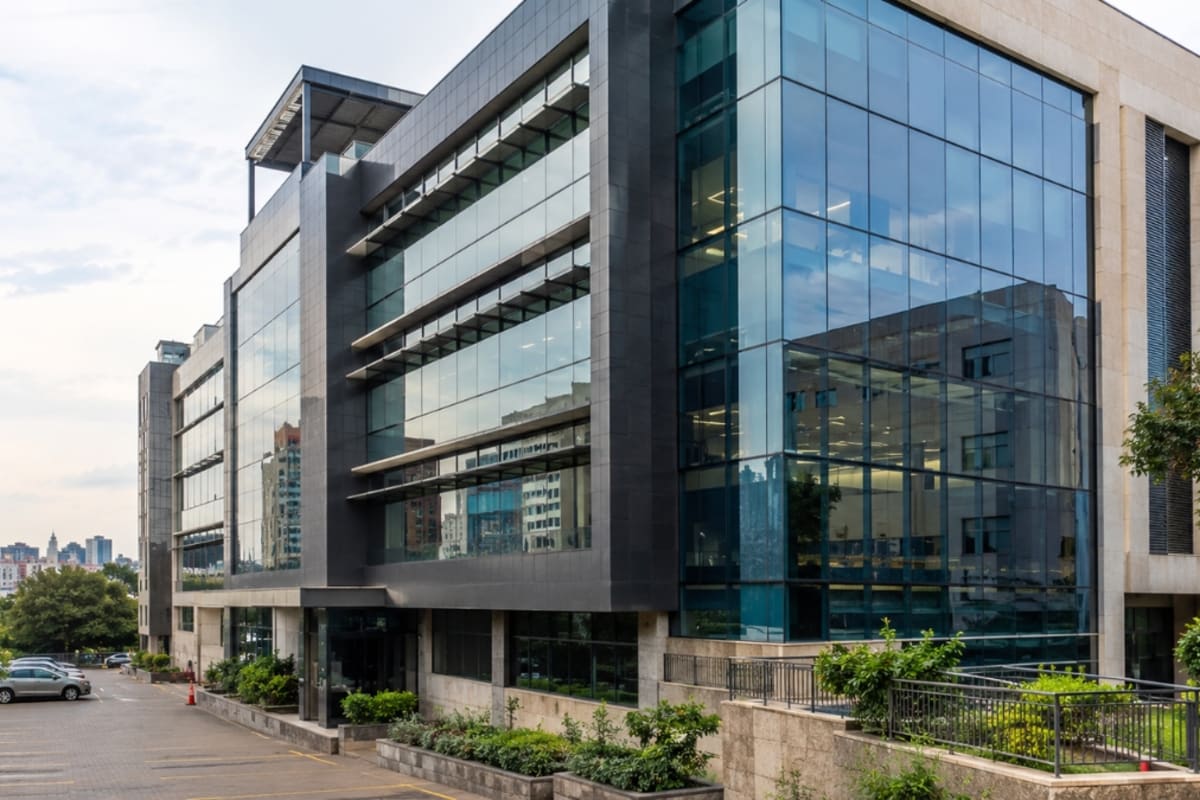
After several difficult years for Nairobi's office sector, demand appears to be improving in some parts of the market.
ENS reported that prime office occupancy increased from 77.71% to 81.58% during 2025, while average asking rents also increased.
The roundtable discussion went a step further.
According to the speakers, much of the post-Covid office development pipeline has remained relatively limited, while some completed buildings are now filling up.
That creates an interesting situation.
If supply remains restrained while demand continues to improve, developers may once again find opportunities in commercial offices.
Pre-leasing could become increasingly important
Another point is the type of office demand we're seeing.
Rather than developers simply constructing large office buildings and hoping tenants arrive later, the discussion pointed towards more pre-leasing and build-to-suit development.
That changes the risk equation.
A developer with committed tenants before construction has greater visibility on future income.
It also means commercial development can be driven by actual demand rather than assumptions about what the market might need five years from now.
For a market that has spent years dealing with excess office space, that distinction matters.
Riverside is one area attracting serious attention
Riverside Drive also came up during the discussion as an area worth watching.
According to one speaker, the area has seen several high-value land transactions this year, with six reportedly exceeding KSH 500 million.
The speaker attributed much of this activity to Chinese buyers and suggested that some of the sites could eventually accommodate high-rise developments of up to 20 storeys.
If those projects move ahead over the next 18 to 24 months, Riverside could see another significant wave of development, over and above the residential development we have seen in the area.
Check out Apartments for Sale in Riverside
The area is already one of Nairobi's established commercial and mixed-use locations, and the recent legal battle surrounding 14 Riverside has also highlighted the enormous value attached to prime commercial property in the area.
The bigger story, however, is what the transactions say about investor appetite for well-located commercial land.
Retail space could also be entering a tighter market
Retail was another area where the speakers saw potential opportunities.
Finding suitable space in some of Nairobi's established shopping destinations is becoming increasingly difficult, particularly in locations such as the Junction, The Hub, Galleria and Village Market.
Actually, finding retail space at the moment in top malls like Village Market or TRM is almost impossible.
That could eventually put upward pressure on rents.
It also creates an opportunity for developers who can identify underserved locations rather than simply building another generic shopping centre.
But the speakers issued an important warning.
Kenya's property market has a habit of copying successful ideas.
Once a particular development model starts working, everyone wants to build the same thing.
That can quickly lead to oversupply, and we have seen that copy mentality in the surge of strip malls.
Not every area needs another strip mall
Strip malls and convenience retail centres are increasingly common across Nairobi and its suburbs.
But the panel's message was that developers need to start with the demand rather than the building.
Who is actually going to shop there?
What are they buying?
How frequently do they visit?
What competition already exists nearby?
And how is changing consumer behaviour affecting the traditional retail model?
Online shopping, for example, is changing how people purchase certain products, while convenience and spontaneous purchases continue to influence physical retail.
In short, a development should not be built simply because another development nearby appears successful.
Industrial property is another segment to watch
Industrial and logistics property also featured in the broader market discussion.
This is consistent with recent market data. ENS described industrial and logistics as one of Kenya's most dynamic property segments in 2025, pointing to major investments in industrial parks, logistics facilities and manufacturing infrastructure.
For investors, industrial property has an additional attraction.
Unlike speculative residential development, the underlying demand can be closely tied to business activity, manufacturing, logistics and trade.
As Kenya's industrial base expands, demand for warehouses, distribution centres and specialised industrial facilities could continue to grow.
Investors may increasingly prefer buildings that already make money
Perhaps the most interesting part of the roundtable was the discussion around large commercial property transactions.
Anthony said that there were four significant transactions under offer, with a combined value estimated at between KSH 12 billion and KSH 15 billion.

The attraction is not necessarily the opportunity to build from scratch.
It is the opportunity to buy an existing building that already has tenants, income and an established operating history.
Based on this, investors are now considering not taking the development risk when they can buy an asset that is already producing income.
That could become an increasingly important theme in Kenya's property market.
Nairobi's large property transactions are becoming more interesting
The panel also referred to significant interest in large commercial buildings, including a reported six offers above KSH 2 billion for the Standard Chartered headquarters building on Chiromo Road.
These figures were raised during the roundtable and should be treated as market observations from the participants rather than confirmed transaction figures.
But what happens to the bidders who miss out on the deal?
They return to the market in search of alternative buildings to purchase. This creates demand beyond a single transaction and could contribute to an increase in commercial property sales in the months and years ahead.
There is growing interest in institutional-quality real estate as an investment class, rather than simply as a development opportunity.
Kenya's capital markets are also becoming more sophisticated around property.
The ALP Industrial USD REIT, for example, was listed on the Nairobi Securities Exchange in March 2026, while other REIT structures have also been developed. ENS described 2025 as an inflection point for Kenya's REIT market.
Related: Understanding REITs in Kenya - The Ultimate Beginner's Guide to REITs in Kenya
Developers may need to think differently
The biggest takeaway from the discussion was not that residential property is finished.
It is that the market is becoming more selective.
Developers cannot assume that another apartment project will automatically find buyers or tenants.
They need to understand the supply already in the market, changing consumer behaviour, financing conditions and the type of income investors are looking for.
At the same time, commercial, industrial and retail opportunities need to be approached with the same discipline.
The next successful development may not necessarily be the biggest building.
It could be the one that solves a very specific demand problem.
The market could remain active into 2027
There was also an interesting political-cycle angle to the discussion.
Most speakers suggested that there is currently a significant amount of capital looking for investment opportunities and that property activity could remain relatively strong into early 2027.
But as the country moves closer to the 2027 General Election, investors and developers may become more cautious.
The advice offered was essentially to start now.
Get land, approvals, and planning work underway while the market is active.
Developers who can use a period of caution to complete construction could then be in a stronger position when activity picks up again.
It is a strategy based on timing rather than simply waiting for certainty.
Also, based on stats, the election period has not really affected the real
Kenya's property story may be changing
For much of the last decade, Kenya's property conversation has revolved around apartments, gated communities and satellite-town housing.
That story is not going away.
But the next chapter could look different.
Commercial offices are showing signs of recovery.
Industrial and logistics property continues to attract investment.
Retail space in established locations is becoming harder to secure. And investors with significant capital appear increasingly interested in established, income-producing buildings.
The question for developers may therefore no longer be simply about what they can build but rather what the market actually needs, and who will pay for it.
That shift could determine where Kenya's next major property opportunities emerge.